

Target Discovery
 Target discovery and functional validation using human in vitro models
Led by Dr Erica Bello, the Target Discovery Group focuses on enabling functional genomic screenings in complex human in vitro models of disease to identify clinically relevant, high-confidence targets for disease therapy.
This team collaborates with academic researchers and clinicians in Cambridge and beyond who have expertise in specific disease areas (e.g. inflammatory bowel disease) and have developed physiologically relevant in vitro models. Their aim is to develop, adapt, and optimise gene editing protocols, high-throughput culture methods and endpoint assays in these complex models, to enable functional genomics screening workflows. These workflows are used to elucidate disease mechanisms and identify novel therapeutic targets.
The Target Discovery Group works with arrayed and pooled CRISPR screening methods and various target validation approaches. They provide important input into the Functional Genomics Screening Laboratory through their expertise in the development and scaling of complex models. The Target Discovery Group also collaborates with the AI and Computational Research Group in the generation and biological interpretation of CRISPR screening and multi-omics datasets. More recently, the Target Discovery Group has contributed to training future scientists through the School of Biological Sciences MPhil programme.
Discover our Research:
Team Members
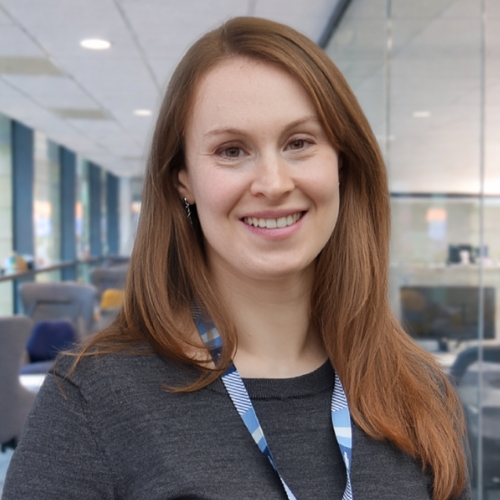
Erica Bello Head of Target Discovery Group |
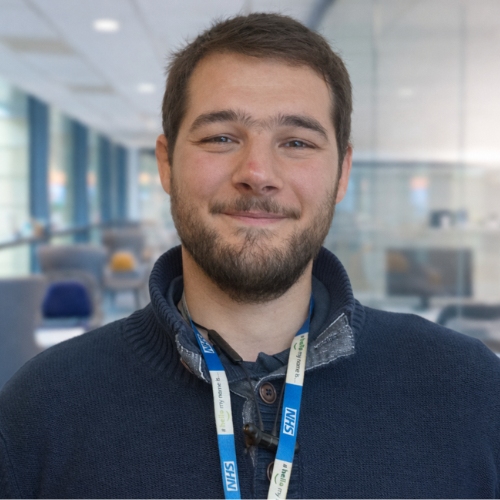 Thomas Dennison Research Associate
|
 SukJun Lee Research Associate |
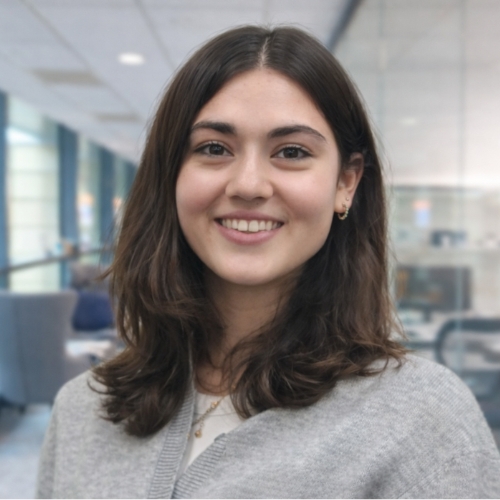 Marisa Edmonds Research Assistant
|
Research Collaborations
 Case Study: Matthias Zilbauer, Inflammatory Bowel Disease
Development of high-throughput gene editing and screening of human intestinal epithelial organoids for target ID and validation
- Optimisation of protocols for high throughput culture of patient-derived intestinal mucosal organoids
- Development of protocols for genetic and epigenetic editing of organoids
- High content phenotyping methods
- Integration of computational research to identify key pathways/targets
Case Study: Frank McCaughan, Lung Cancer
Pooled whole-genome CRISPR knockout screen to investigate the mechanism of action of a pan-AKT inhibitor in squamous cell lung and oesophageal cancer cell lines
- Integrational of computational and experimental approaches
- Identification of genes involved in drug resistance and sensitivity
- Target validation using an engineered air-liquid interphase organotypic model of lung cancer
Selected Publications
Bello E et al.
An Alzheimer’s disease-associated common regulatory variant in a PTK2B intron alters microglial function
bioRxiv 2023.11.04.565613 (2025)
Dennison T et al.
Patient derived organoid biobank identifies epigenetic dysregulation of intestinal epithelial MHC-I as a novel mechanism in severe Crohn’s Disease.
Gut 73:1464-1477 (2024)
Edgar R et al.
Culture associated DNA methylation changes impact on cellular function of human intestinal organoids.
Cellular and Molecular Gastroenterololgy and Hepatology 14(6): 1295–1310 (2022)
An organoid in the sigmoid colon, a section of the large intestine. The green colour is a stem marker called LGR5, the red is a cell membrane marker called e-cadherin, and the blue is a nuclei stain called DAPI. Video by April Foster.
An organoid in the terminal ileum, a section of the small intestine. The green colour is a stem marker called LGR5, the red a cell membrane marker called e-cadherin, and the blue is a nuclei stain called DAPI. Video by April Foster.
CRUK CAMBRIDGE CENTRE
The Milner Therapeutics Institute (MTI) is a physical affiliated research institute of the Cancer Research UK Cambridge Centre.
The MTI has three goals to help drive the development of new medicines:
- To facilitate collaborations between academic researchers and those based in the pharmaceutical industry.
- To carry out our own research focused on finding new treatments through partnership with clinicians and scientists throughout the UK.
- To enable the next generation of scientific entrepreneurs to develop new companies to deliver new treatments for disease.
These goals are aligned with the Cambridge Centre’s strategies of conducting impactful research, enabling early diagnosis, developing new leaders in cancer research and partnering with patients and the public. Through the Milner Therapeutics Consortium, we help to build teams of researchers to work together to solve challenges in cancer research. Our research teams use computational approaches and artificial intelligence to analyse information from patient samples. These data can reveal new targets to treat cancer or drug combinations that could reduce the chance of drug resistance occurring.