

Ecosystem Insights: From PhD to Start-Up Company

Winnie Lei completed her PhD in the Milner AI and Computational Research group in 2024. Since then, she has pivoted from academia to business, beginning a role as Data Scientist at Avatrial, a company based in the Milner’s bio-incubator. We caught up with Winnie to learn about her journey so far:
How did your PhD at the Milner Institute shape your career direction?
I was initially drawn to the Milner’s unique positioning at the crossroads of academia and industry – a place where fundamental research is constantly being translated into real-world impact. The vibrant ecosystem of start-ups and biotech companies, coupled with regular talks from serial entrepreneurs, funders, clinicians, and scientists, gave me a firsthand glimpse into the possibilities beyond the bench. I saw the power of translational science and discovered stories that bridge discovery and application – an experience that not only shaped my career direction but opened doors toward future opportunities in industry-led innovation.
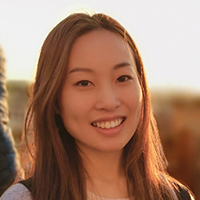
Winnie Lei
Data Scientist
Can you share a memorable challenge or breakthrough moment from your PhD journey?
During the first year of my PhD, I faced the sudden loss of a crucial resource mid-collaboration. I embraced the setback as a challenge to innovate, and took time to rethink and brainstorm approaches with my lab mates. By pivoting from the original biological modelling tool to Boolean simulations, we not only sustained the project but ultimately validated our initial findings from the biological network through an entirely new lens. The breakthrough wasn’t just technical – it was a testament to resilience, adaptability, and the kind of creativity that turns roadblocks into launchpads (If you are interested in the technical side, please read Lugin et al., 2025).
What led you to join Avatrial, and how did the transition from academia to industry go?
I joined Avatrial because its focus on cancer research was a natural continuation of my postgraduate research. The transition from academia to industry felt purposeful – the pace was faster and the impact was more immediate. Working closely with teammates toward shared objectives brought a stronger sense of momentum and fulfilment that can be less common in many PhD projects, where autonomy sometimes borders on isolation. At Avatrial, I’ve been able to translate the computational biology skills from my PhD within a fast-paced startup environment – where the mission is clear and the potential to impact patients is deeply motivating.
In what ways does your work at Avatrial connect to what you studied during your PhD?
I’ve continued the analytical thread from my PhD, working with multi-omics datasets that are similar in structure but far richer in depth and quality. The scientific questions remain familiar, but the pace and scope have shifted – we’re exploring diverse cancer types with data at potentially larger scales. I’ve built automation pipelines to streamline repetitive analyses, which has greatly enhanced communication and collaboration with our experimental team. Perhaps most excitingly, we’re validating findings using technologies more quickly both in the wet lab and computationally at greater spatial and molecular resolution, allowing us to push the boundaries of translational insight in ways that weren’t previously possible.
 Visit the Avatrial website » Explore Milner AI and Computational Research »