ARCHIVE: CONSORTIUM CASE STUDIES & PROJECTS
The Therapeutics Consortium agreement enables collaborative research between Consortium companies and academics across Cambridge. The projects are broad in remit and can include access to compounds, datasets or know-how in a particular technique. In some cases, an industry scientist has come to work in the academic’s lab, and in others an academic post has been funded specifically for the project. The emphasis in all our collaborations is on mutual sharing of expertise.
Explore past projects below. Please contact us if you are interested in finding out more.
CASE STUDIES
DISEASE MODELS: Novel therapeutics for liver disease
Project initiated: 2019
Non-alcohol fatty liver disease/non-alcoholic steatohepatitis (NAFLD/NASH) are becoming a leading cause of liver disease in developed countries and, in many cases, organ transplantation is the only available treatment. Development of new therapies is currently impaired by the absence of physiologically relevant disease models. To address this limitation, Ludovic Vallier (Wellcome MRC Cambridge Stem Cell Institute) is working with GlaxoSmithKline and Ferring Pharmaceuticals to identify and validate new therapeutic targets in liver disease through CRISPR/Cas9-based genetic screens. Of particular interest, this consortium aims to identify new genes protecting liver cells against toxicity induced by fatty acids. This project will bring together a novel in vitro human model for NAFLD/NASH established in the Vallier group and NASH/NAFLD expertise from the two companies.
This consortium provides a unique opportunity to combine our expertise on disease modelling with the therapeutic knowledge from the pharmaceutical industry. This combination will allow the identification of new target genes for drug development against a major unmet clinical need.

PROJECTS ESTABLISHED THROUGH THE MILNER CONSORTIUM
DISEASE MODELS: Use of immortalized human adipocytes to identify novel regulators of GLUT4 trafficking
Project initiated: 2022
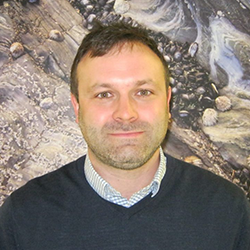
Insulin increases glucose uptake from blood into fat (and muscle) cells through the translocation of the glucose transporter GLUT4 from inside the cells to the plasma membrane. In patients with type 2 diabetes, cells become resistant to the effects of insulin, meaning that levels of glucose in the blood continue to rise, damaging essential organs such as the eyes and heart. Daniel Fazakerley (Institute of Metabolic Science) and David Gershlick (Cambridge Institute for Medical Research) are working with AstraZeneca to develop a model that will allow the regulation of GLUT4 by insulin to be better understood and potentially lead to the development of new drugs for the treatment of patients with type 2 diabetes.
DISEASE MODELS: An organoid library of the human endometrium
Project initiated: 2020
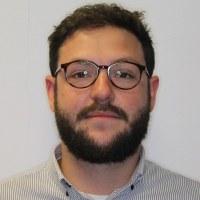
The proper function of the endometrium is fundamental to the establishment and maintenance of pregnancy, but there are key gaps in our understanding of its fundamental biology. Margherita Yayoi Turco (Department of Pathology) is collaborating with Ferring Pharmaceuticals to develop lineage-specific organoid models of the endometrium and determine the signalling pathways that are important for these. Together this will provide insights into epithelial, stromal and immune cell interactions throughout the monthly cycle and inform development of better endometrial co-culture models for understanding fertility.


CHEMISTRY: The use of artificial intelligence technologies in fragment-based drug discovery
Project initiated: 2018
Astex are working with Lucy Colwell (Yusuf Hamied Department of Chemistry) to develop machine learning methods for fragment-based drug discovery (FBDD). FBDD can be used to identify low molecular weight chemical starting points to generate new drug leads. It has advantages over conventional high-throughput screening because it enables the sampling of chemical space more effectively with fewer compounds. The machine learning methods will be trained on existing datasets from Astex’s fragment screening campaigns to help understand what drives fragment binding. Ultimately the aim is to use these models to predict the binding of, and propose follow up, fragments. Experimental data and expertise from Astex will be used to inform the methods and to validate outputs. This project will provide an in-depth understanding of the utility of machine-learning methods in the FBDD field.
ONCOLOGY: Identifying potential therapies for early squamous lung cancer
Project initiated: 2018
Rational chemoprevention strategies are needed for intervention in patients at high risk of lung cancer. To better understand this disease, and devise potential approaches to detection and treatment, Frank McCaughan (Departments of Medicine and Biochemistry) has developed a novel model of early squamous lung cancer that recapitulates the key molecular and phenotypic features of the disease. In collaboration with the Lung Cancer Initiative at Johnson & Johnson (LCI), this organotypic model of bronchial dysplasia (OTC) will be used as a screening platform for potential therapeutic targets, using both compounds from Janssen R&D and genetic analysis with CRISPR and inducible shRNA.

ONCOLOGY: Strategies to influence T-cell mediated tumour killing
Project initiated: 2018
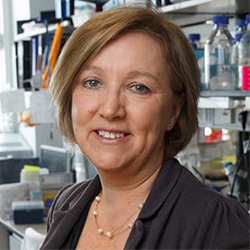
The majority of immune-oncology (IO) therapies are focused on enhancing the activity of tumour-killing CD8+ cytotoxic T-cells. Gillian Griffiths (Cambridge Institute for Medical Research and Department of Medicine) is working with AstraZeneca to determine pathways that enhance or reduce the ability of cytotoxic T cells to kill tumour cells.
ONCOLOGY: Investigating how different sub-types of breast cancer respond to different treatments
Project initiated: 2016
Breast cancer consists of a number of different genomic sub-types which makes effective treatment challenging and prognosis variable. Some sub-types respond well to particular drugs or drug combinations whereas others are resistant. Carlos Caldas (CRUK Cambridge Institute) is collaborating with AstraZeneca to investigate the different responses of breast cancer sub-types, using a bio-bank pioneered in his lab of breast cancer patient-derived tumour cells and tissues.
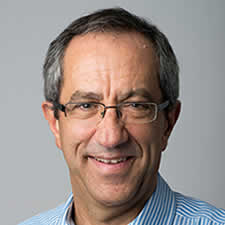

SIMON COOK ONCOLOGY: Investigating mechanisms of ERK1/2 inhibition
Project initiated: 2015
Simon Cook (Babraham Institute) has collaborated with Astex to investigate the significance of different modes of ERK1/2 inhib-ition in cell lines and the consequences for cancer cell growth inhibition and adaptive resistance. Targeting the ERK1/2 pathway with BRAF or MEK inhibitors in melanoma has been very successful but many cancers do not respond or adapt to current BRAF or MEK inhibitors by reinstating ERK1/2 signalling. This project involved a detailed study of how different ERK inhibitors alter downstream pathway signalling, and revealed that a dual-mechanism inhibitor may provide more prolonged pathway inhibition, with potential implications for ongoing inhibitor development in the clinic.
PUBLICATIONS
Sipthorp J et al. Bioconjugate Chem. (2017)
Kidger A et al. Pharmacol Ther. (2018) (Review)
Kidger et al. Mol. Cancer Therapy (2019)
ONCOLOGY: Insights into the use of PROTAC molecules as a therapeutic strategy
Project initiated: 2017
PROTACs (proteolysis targeting chimeric molecule), heterobifunctional nanomolecules that can recruit proteins to the ubiquitin-proteasome machinery for degradation, are being tested as a potential strategy for the treatment of cancer. Tony Kouzarides (Milner Therapeutics Institute and Gurdon Institute) is working with GSK to assess how a novel PROTAC molecule against a key epigenetic regulator affects cell proliferation, viability and division, and changes in gene expression, in a human cell model of acute myeloid leukaemia.
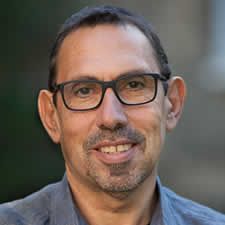

ONCOLOGY: Uncovering how Myc-mediated gene expression supports the tumour environment and Strategies to prevent the progression to pancreatic adenocarcinoma
Projects initiated: 2017
Uncovering how Myc-mediated gene expression supports the tumour environment. Gerard Evan (Department of Biochemistry) is collaborating with AstraZeneca to examine the role of the oncogene Myc in supporting the tumour environment.
Strategies to prevent the progression to pancreatic adenocarcinoma. In a second project, Cathy Wilson (Department of Pharmacology) working with Gerard Evan will collaborate with AstraZeneca to test the impact of inhibiting neutrophil influx on Myc-induced transition from pre-invasive pancreatic intraepithelial neoplastic lesions to pancreatic adenocarcinoma.
ONCOLOGY: Frank McCaughan (Departments of Medicine and Biochemistry) has a novel organotypic model of early squamous lung cancer and is collaborating with AstraZeneca to determine novel targets for preventing tumorigenesis
Project initiated: 2017
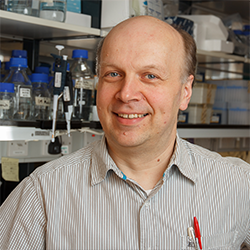
ONCOLOGY: Capturing the Early Stages of Acute Myeloid Leukaemia to Evaluate New Therapeutics
Project initiated: 2017
Bertie Göttgens (Stem Cell Institute) is working with AstraZeneca to test how combined therapeutic strategies can affect sequential disease stages of acute myeloid leukaemia including pre-leukaemia development in progenitor cells and development of resistance mechanisms against treatments.
INFECTIOUS DISEASE: Advancing disease understanding and drug discovery in infectious diseases
Project initiated: 2017
Pseudomonas aeruginosa — a pathogen that is lethal for many patients in hospital intensive care units — is also frequently associated with chronic airway infections in cystic fibrosis patients. The mechanism of infection is through the Type III Secretion (T3S) system, which is therefore a target for intervention strategies aiming to suppress pathogen virulence. The protein PcrV has been shown to be critical to virulence via the T3S system and antibodies against PcrV are being pursued as a potential therapeutic strategy. There are usually a number of microbial species present in an infection in addition to P. aeruginosa and it is also possible that inhibition of the T3S system may inadvertently increase antimicrobial resistance. Martin Welch (Department of Biochemistry) is therefore working with Shionogi to better understand i) the molecular mechanisms underpinning anti-PcrV antibody action, ii) how to quantify antibody action and iii) the wider consequences of inhibiting PcrV function on other cell processes. Knowledge, antibodies and assays are being shared between the two partners and a senior research scientist from Shionogi is working alongside academic scientists in the Welch lab to enable efficient transfer of knowledge and technical skills back in-house to Shionogi in Japan.

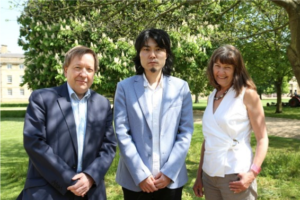
CNS DISEASES: Improving drug discovery in CNS diseases
Project initiated: 2017
Trevor Robbins (Department of Psychology) and Angela Roberts (Department of Physiology, Development and Neuroscience), experts in the brain networks of the frontal lobes and their associated neurochemical systems that mediate cognition and behaviour, are working with Shionogi to test novel and first-in-class compounds on specific models of cognition and behaviour in rodents and marmoset monkeys. The combination of world leading academic knowledge and expertise in drug discovery will enable the development of new preclinical methods and models to evaluate cognitive and emotional functions that will improve candidate selection for mental health disorders.

DISEASE MODELS: Elucidating signalling pathways that drive lung development in improved organoid models
Project initiated: 2017
Emma Rawlins (Gurdon Institute) and Joo Hyeon Lee (Stem Cell Institute) are collaborating with AstraZeneca to uncover pathways that regulate growth and differentiation of lung progenitor cells.

CARDIOVASCULAR & METABOLISM: A drug re-purposing strategy for treatment of angina
Project initiated: 2017
Anthony Davenport (Department of Medicine) is working with AstraZeneca to selectively block signalling by the potent vasoconstrictor endothelin that contributes to vasospasm in small coronary arteries in patients with angina.
ONCOLOGY: Mechanisms of resistance to ALK inhibition in neuroblastoma
Project initiated: 2017
Suzanne Turner (Department of Pathology) in collaboration with AstraZeneca.